AI Agent — automate conversations and workflows. Now available on Free plan



Introduction
It’s 7pm on a Saturday. A child has a fever that won’t come down, the pediatrician’s office is closed, and the choice seems to be between waiting it out and spending the evening in an emergency room.
That’s how the ER becomes the default for so many people. Not because they need emergency care, but because nobody was available to tell them they didn’t. In the VA health system, low-acuity conditions account for an estimated 60% of emergency department visits.
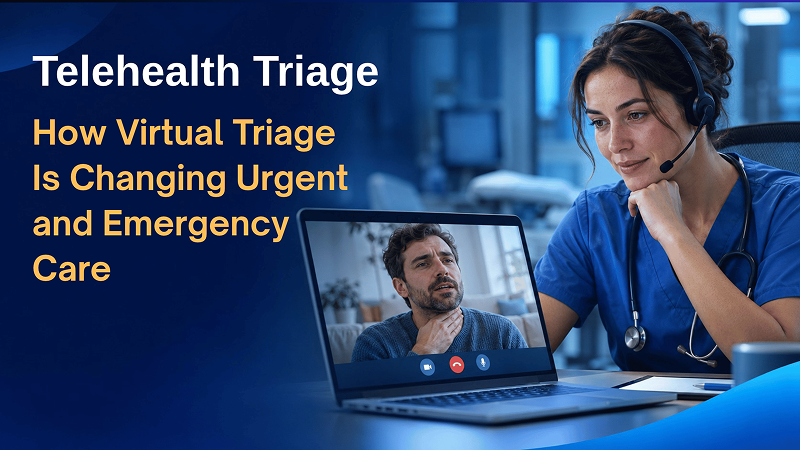
Telehealth triage fills that gap. A clinician assesses the patient by phone, video, or a short digital intake, works out how urgent the problem really is, and sends them to the right place: home with advice, a virtual visit, an urgent care clinic, or, when it matters, straight to the ER.
It sounds simple, and in many ways it is. The results are not small. In the VA’s national tele-emergency program, patients who used it made 36.6% fewer ER visits, with no increase in deaths. In Houston, a telehealth program for 911 callers meant only 18% of eligible patients went to the ER by ambulance, compared with 74% of similar patients without it.
This guide looks at how telehealth triage works, where it’s used across urgent care, emergency departments, and EMS, what the evidence shows, and what it takes to set it up well.
Key Takeaways
- Telehealth triage routes patients to the right level of care before they travel: self-care, a virtual visit, urgent care, or the ER.
- In the VA’s national tele-emergency program, users made 36.6% fewer ER visits, with no rise in deaths within 30 days.
- It works at every front door: nurse advice lines, urgent care check-ins, ED triage desks, and 911 calls.
- It speeds things up, too: rural emergency departments using telemedicine saw patients 6 minutes sooner on average.
- The programs that work have clear escalation rules, easy patient access, and a clean handover to in-person care.
What Is Telehealth Triage?
Triage is one of the oldest decisions in medicine: who needs care first and what kind. Telehealth triage makes that decision before the patient has left home.
You’ll see it called teletriage, tele-triage, or virtual triage. They all describe the same practice, delivered in three main ways:
- By phone. Telephone triage is the original version. Nurse advice lines have been doing it for decades.
- By video. The clinician can see what a voice can’t convey: how someone is breathing, a wound, or a rash.
- Digitally. An online symptom form or chat gathers the details first, so the clinician starts with the full picture.
Urgent and emergency care ask more of a telehealth platform than most settings do, as our overview of who uses telehealth platforms shows. Speed and easy access matter more here than almost anywhere else.
Increasingly, software asks the first questions. AI patient triage can gather symptoms and suggest an urgency level before a clinician steps in. This guide focuses on the care pathway: what happens once a patient reaches out and where they end up.
How Virtual Triage Works in Urgent Care
Most telehealth triage follows the same five steps:
- The patient reaches out. A phone call, a link on the clinic’s website, or a message.
- Intake. Symptoms, history, and a short set of red-flag questions.
- A clinician assesses. A nurse or physician, by phone or by video, when they need to see the problem.
- A decision. Self-care advice, a virtual visit now, an urgent care appointment, the ER, or 911.
- Follow-up. A message or call to check if the patient got where they needed to go.
The decision is where the value lies. When the VA added same-day virtual visits with a provider to its nurse triage line, 57% of the calls nurses would otherwise have sent to the ER were resolved in the virtual visit instead.
One rule matters more than any other: when in doubt, escalate. Good programs write down the red flags that end a virtual assessment and send the patient straight to emergency care, and they make that handover fast.
Telehealth Triage in Emergency Departments and EMS
Telehealth triage isn’t only for patients at home. It’s changing what happens at the hospital door and in the back of an ambulance, too.
At the triage desk. Some emergency departments now put a remote physician at triage. In a study of 14 rural hospitals, patients using telemedicine saw a provider 6 minutes sooner on average. When the remote physician was the first to see them, which happened in 42% of cases, they were seen almost 15 minutes earlier. A children’s ED that added a telemedicine screening at triage cut median door-to-provider time by more than 8 minutes and shortened stays as well.
On the road. Houston’s Emergency Telehealth and Navigation program connects paramedics and 911 callers with non-life-threatening problems to an emergency physician by tablet. Only 18% of those patients went to the ER by ambulance, compared with 74% of similar patients without it, and ambulances were back in service 44 minutes sooner.
For time-critical emergencies. Telestroke programs bring a neurologist to a rural emergency department by video, so treatment decisions don’t wait for a transfer.
After the visit. Once a patient leaves the ER, a virtual check-in can catch problems early and keep them from coming back. It’s one of the most practical ways to blend virtual and in-person care, as our guide to hybrid care models explains.
Does Telehealth Triage Reduce ER Visits?
Yes, when it’s set up well. The strongest evidence comes from the VA, which has been running tele-emergency care since 2021.
The idea is simple. Veterans who call the nurse line and are told they need care within 24 hours are offered a video or phone visit with an emergency physician. In the first pilot, those who took it had fewer ER visits and hospital stays over the following week than patients who got standard nurse triage, and the VA spent $248 less per patient on outside ER care. The physicians even resolved more than 40% of chest pain complaints during the virtual visit itself.
When the program went national, the results held. Users made 36.6% fewer ER visits, with no increase in deaths within 30 days.
There’s a lesson in the details, though. Only 17% of eligible callers ended up using tele-emergency care, so the effect on whole facilities was much smaller. Telehealth triage works for the patients who use it. Getting more of them to use it is half the job.
Other programs point the same way. A virtual emergency department in Queensland, Australia, managed 70% of the patients referred to it without a trip to a physical ED.
It isn’t a switch you flip, though. A 2025 national VA study found low-acuity ER visits stayed 12.4% below their old levels after virtual care expanded, but it couldn’t show patients swapping one directly for the other. The gains come from building triage into the pathway, not just offering a video option.
Why It Matters for Urgent Care Organizations
For an urgent care operator, telehealth triage isn’t just about keeping people out of the ER. It changes how the whole service runs.
- Capacity. In-person slots go to patients who need hands-on care, not to questions that a five-minute call could settle.
- Speed. Patients get an answer in minutes instead of a wait in the lobby.
- Reach. People who live far from a clinic can still get a fast, expert answer. For rural communities, that can be the difference between care and no care, as our guide to telehealth in rural areas explores.
- Cost. Fewer unnecessary ER visits and ambulance trips save money for patients, payers, and providers alike. To make the case internally, see Telehealth ROI: Measuring the Value of Your Platform Investment.
Risks and How to Manage Them
Telehealth triage has real limits, and the best programs plan for them from day one.
- Under-triage. The biggest risk is telling someone they’re fine when they’re not. Research on the safety of remote triage is still patchy: a 2024 systematic review called the evidence fragmented. Written protocols, a low threshold for escalation, and tracking what happens to patients after the call all help.
- Over-prescribing. At Cleveland Clinic, 58% of virtual urgent care visits for respiratory infections ended with an antibiotic prescription, compared with 43% in person. Clear prescribing guidelines matter as much online as in the clinic.
- Access gaps. Not everyone has good broadband or a smartphone or feels comfortable on video. A phone option keeps the door open.
- Licensing and privacy. Clinicians must be licensed where the patient is, and every call, message, and file has to be handled to HIPAA standards.
What a Telehealth Triage Platform Needs
Urgent care triage puts specific demands on technology. A general-purpose video tool won’t cover them. Look for:
- One-click access. Patients join from a link, with no download or account.
- Smart queues. Patients are routed by urgency, so the sickest are seen first.
- Phone, video, and chat in one place. A call can turn into a video visit the moment the clinician needs to see something.
- Room for more than two. A specialist, an interpreter, or a family member can join the call.
- A clean handover. Booking an urgent care slot, alerting the ER, or sharing notes, without starting over.
- Documentation and EHR connection. So the triage decision follows the patient.
- AI-assisted intake. Software can take the first pass at gathering symptoms, as our look at how AI agents support patient triage workflows explains, freeing clinicians for the decisions only they can make.
Conclusion: How QuickBlox Supports Telehealth Triage
The emergency room was never meant to be the front door for every worry. Telehealth triage gives patients a faster, simpler way to find out where they really need to go. It gives urgent care and emergency teams a way to save in-person capacity for the people who need it.
Q-Consultation for Healthcare, our white-label telehealth platform, gives urgent care and emergency teams the building blocks for virtual triage under their own brand. Patients join from a link, wait in a private virtual waiting room, and move through a queue to the right clinician by video or chat. Its AI Agent can handle intake before a clinician joins, then hand the conversation over.
For teams adding triage to an existing app or patient portal, our HIPAA-compliant telehealth infrastructure provides the chat and video APIs and SDKs to build it in.
If you’re planning a telehealth triage service, we’re happy to talk it through.
Additional Resources
The guides below cover the foundational questions behind the telehealth decisions explored in this article. Browse the full QuickBlox Knowledge Center for more.