Summary: Telehealth sounds great on paper — but what really matters is whether it actually makes your clinic run better and brings in real returns. This article breaks down what telehealth ROI really looks like, where the money and time savings actually show up, and which numbers are worth paying attention to. You’ll get a clearer picture of how digital health tools affect day-to-day workflows, patient experience, and provider efficiency — and how to tell if your investment is truly paying off.
Table of Contents
Introduction: Why Telehealth ROI Matters Now
Telehealth has changed quickly over the last few years — faster than many healthcare teams anticipated. What began as a temporary solution during a crisis gradually became a permanent fixture of modern-day healthcare. Today, video visits, secure messaging, and virtual workflows have become built into day-to-day healthcare delivery. As more organizations include telehealth as part of their digital health strategy, questions arise about whether it is an investment worth making.
It’s a reasonable concern. Budgets are tighter than they were a few years ago, and expectations are higher. Stakeholders want realistic answers, not optimistic projections. Building a telehealth platform is no longer about proving it can exist — it’s about proving it delivers measurable value. That’s where telehealth ROI becomes complicated. The returns aren’t limited to revenue alone. ROI also shows up in operational efficiency, clinician workload, and patient outcomes. Measuring all of that together isn’t always straightforward.
If you’re building a platform, comparing vendors, or even just investing in healthcare and trying to get your head around where the real returns usually show up, this article tries to break it down in a simple, honest way. Telehealth isn’t just about generating higher revenues, its also about creating a more efficient operational backbone for your whole service. In the following we’ll dig into what “value” actually looks like when you’re talking about virtual care.
Learn more about – What’s Next in Telehealth Tech: Trends to Watch in 2026
What Telehealth ROI Really Means
Talking about “ROI” in telehealth can get confusing. Although most founders and clinicians just want to know, is this platform actually helping us or not? Telehealth ROI isn’t as straightforward as buying a tool and checking if revenue magically jumps the next morning.
Obviously there is the hard financial side, how much does it cost and much much revenue does it generate? But if you only stare at revenue, you miss the stuff that actually drives long-term value: time saved, smoother workflows, fewer missed appointments, and clinicians who aren’t drowning in admin tasks. ROI usually doesn’t show up as one big “wow.” It’s more like a bunch of small improvements that start stacking. Those pieces are messy to measure, but they’re where a lot of the real gains come from.
So when we talk about telehealth ROI, we need to consider a range of things rather than one perfect number:
- financial gains
- operational efficiency
- patient experience
- clinician workload (or relief from it)
This is the “full picture” of a health tech investment, even the parts that don’t show up neatly on a spreadsheet but end up shaping the success of the platform anyway.
Learn more about – Custom Telehealth Software Development: A Game-Changer for Healthcare
The Hard Numbers: Tangible ROI Metrics to Track
Even though telehealth ROI is not just about money – it is still important to be able to measure and track figures that demonstrate its worth. Here are the metrics most teams end up tracking:
1. Reduced Operational Costs
This is usually the easiest win to spot. Telehealth often cuts down admin hours — scheduling, reminders, intake, basic triage — all those little tasks that eat up entire days. Once you automate even a slice of that, you start seeing savings in staff time or simply the ability to get more done without hiring more people.
2. Lower No-Show Rates
A big one. Patients are more likely to show up when they don’t have to travel, take time off work, or rearrange their whole day. Some clinics see double-digit drops in no-shows after moving follow-ups and simple consults online. If you’re looking at telehealth as a health tech investment, this alone can move the needle more than people expect.
3. Higher Provider Efficiency
Telehealth usually ends up shortening visits — not because doctors are rushing, but because everything just flows better. There’s less bouncing between rooms, fewer interruptions, and no digging around for missing paperwork. A lot of clinics quietly find they can fit in more consults each day without burning people out. In the long run this makes a real difference when you look at ROI.
4. Revenue Growth From New Services
One exciting phenomenon of telehealth is that it provides new revenue generating opportunities. Once telehealth is up and running, many teams realize they can offer additional services — quick follow-ups, remote check-ins, mental health visits, evening or weekend slots, even whole new patient groups — which are all billable. So the investment isn’t just about cutting costs. For a lot of organizations, it actually opens the door to new revenue and new ways to care for patients.
5. Shorter Time-to-Care
If a patient has to wait three weeks for an in-person appointment but can be seen digitally in two days, the impact on retention and satisfaction is huge. Faster care = more patients sticking with you instead of deciding to move to a competitor.
None of these numbers alone tells the whole story, but collectively over a period of time–and especially once the initial setup phase settles down–they provide a clear sense of whether your health investment in telehealth is actually paying off.
Learn more about – How AI in Telehealth Is Powering Workflow Automation
The Hidden Wins: Soft ROI Most Teams Miss
While the visible and immediate financial wins matter, there are also hidden longer-term wins to take into account. A lot of the long-term value comes from these quieter improvements that over time bring benefits that you weren’t even tracking.
1. Faster, Cleaner Clinical Workflows
Digital tools and automation can greatly enhance clinical workflows. Online intake forms, video call transcription, consultation notes that sync with EHR systems, all of these types of features means faster, cleaner operations. Even a few saved minutes per appointment adds up fast. While this type of gain might be difficult to track on a spreadsheet, it’s still real ROI.
2. Happier Patients (Which Means They Come Back)
Telehealth provides numerous benefits for patients, not least of which is convenience. Patients who feel looked after, who don’t spend half their day traveling and waiting, tend to stick with your service. They trust you more. They book follow-ups and recommend you. There’s no exact number for trust, but it’s a huge part of what makes a health tech investment successful.
3. Less Clinician Burnout
Clinician burnout is a huge issue and one of the most expensive “hidden costs” in healthcare. If digital tools reduce repetitive admin, shorten documentation time, or just make the day less chaotic, that directly affects turnover and morale. A huge plus when assessing ROI.
4. Scalability Without Scaling Costs
When workflows are digital, you don’t have to grow your staff base at the same speed you grow your patient volume. You can stretch your capacity without stretching your payroll in the same way.
5. Stronger Brand Positioning
This is subtle but important if you’re investing in healthcare for the long term. A smooth, reliable telehealth experience signals professionalism. Patients notice. Partners notice. Even investors notice. A well-functioning platform becomes part of your brand story.
These “soft ROI” areas aren’t usually the first things leadership teams think about, but they’re often the reasons digital care sticks — and why your digital health investment keeps delivering returns long after the initial numbers settle.
Learn more about – A Guide to Seamless Telehealth Integration with EHR Systems
Telehealth ROI Mistakes to Avoid
Even the best telehealth rollout can go sideways if a few key things get overlooked. These aren’t dramatic failures — more like small, predictable mistakes that quietly chip away at your telehealth ROI and make your whole health tech investment feel less effective than it should be. The good news is that once you know what to watch for, most of these are totally avoidable.
1. Choosing the Wrong Telehealth Platform for Your Clinic
One of the most common — and expensive — ROI mistakes happens before launch even begins: picking a telehealth platform that doesn’t actually fit how your clinic operates.
On paper, many platforms look similar. In practice, small mismatches add up quickly. A system that’s built for large hospital networks may feel bloated and slow for a smaller practice. A lightweight tool designed for quick video calls may fall apart once you need scheduling logic, intake workflows, documentation support, or follow-ups.
When the platform doesn’t align with your real-world needs, you start seeing:
- low clinician adoption
- workarounds and duplicated effort
- rising support and admin costs
- features left unused
- frustrated patients and staff
- All of that quietly erodes ROI
The right platform should match:
- your clinic size and growth plans
- how your clinicians actually deliver care
- your patient communication style
- your compliance and data-handling requirements
- your ability to configure workflows without rebuilding everything
Telehealth ROI isn’t just about what a platform can do — it’s about what your team will realistically use, every day, without friction. Getting this choice right upfront makes every other ROI metric easier to improve.
Before choosing a telehealth platform, ask:
- Does this platform fit our current clinic size — and still make sense if we grow?
- Will clinicians actually use it without changing how they practice?
- Can we customize workflows (intake, scheduling, follow-ups) without heavy development work?
- Does it support our compliance requirements from day one?
- Are we paying for features we realistically won’t use?
- How much training will staff actually need to get comfortable?
- Can it integrate with the tools we already rely on?
- Will patients find it simple — or confusing?
If you’re answering “not sure” to several of these, that uncertainty will almost always show up later as slower adoption, higher costs, and weaker ROI.
2. Not Tracking Before-and-After Metrics
If you don’t measure where you started, you won’t know what has improved. A surprising number of clinics launch telehealth and then realize they never wrote down their old no-show rate, or how long intake used to take. Then everyone ends up guessing.
3. Ignoring Clinician Feedback
Given that it’s your clinicians who are using the telehealth platform daily, their feedback is crucial. No matter how beautiful the dashboard, if your staff feel that the platform slows them down or doesn’t fit their workflow, your ROI takes a hit.
4. Overbuilding or Overbuying
A lot of organizations end up buying way more than they really need. Features, add-ons, and integrations may all sound impressive, but if nobody uses half of it, you’re just paying for clutter.
5. Underestimating Training and Onboarding
Even the best tools take time to get used to. If rollout is rushed without proper training given, problems will start popping up with slow adoption, frustrated staff, and support tickets stacking up.
6. Treating Telehealth as a Side Project
Telehealth isn’t a side tool anymore. It’s an integral part of how care is delivered and an increasingly big part of the patient experience. Treating it like a secondary tool or after thought almost guarantees disappointing results.
7. Expecting Instant ROI
Telehealth ROI usually builds gradually — an improvement in no-shows here, some time saved there, a bump in patient retention later. It’s a slow stacking effect, not immediate big wins.
8. Not Planning for Scale
Some teams choose a platform that works for their current size but breaks the moment they try to grow. If you’re serious about investing in healthcare long-term, scalability should be a top priority from day one.
9. Only Measuring the Money
A lot of teams focus on revenue and nothing else. Yes, financial return matters — especially if your board wants clean numbers — but telehealth also changes:
- time savings
- patient retention
- provider workload
- appointment volume
If you ignore these “soft” gains and focus only on revenue gains when measuring the value of your investment, your ROI picture will remain incomplete.
Conclusion
Telehealth isn’t just another line item in a budget anymore. It’s become part of how modern healthcare actually works — and how it grows. When you look at telehealth ROI through a wider lens (not just profits, but time saved, less admin chaos, happier patients, calmer clinicians), the value of a solid digital health investment becomes a lot clearer. Most of the returns don’t show up all at once; they build slowly, almost quietly, until one day the whole operation run better.
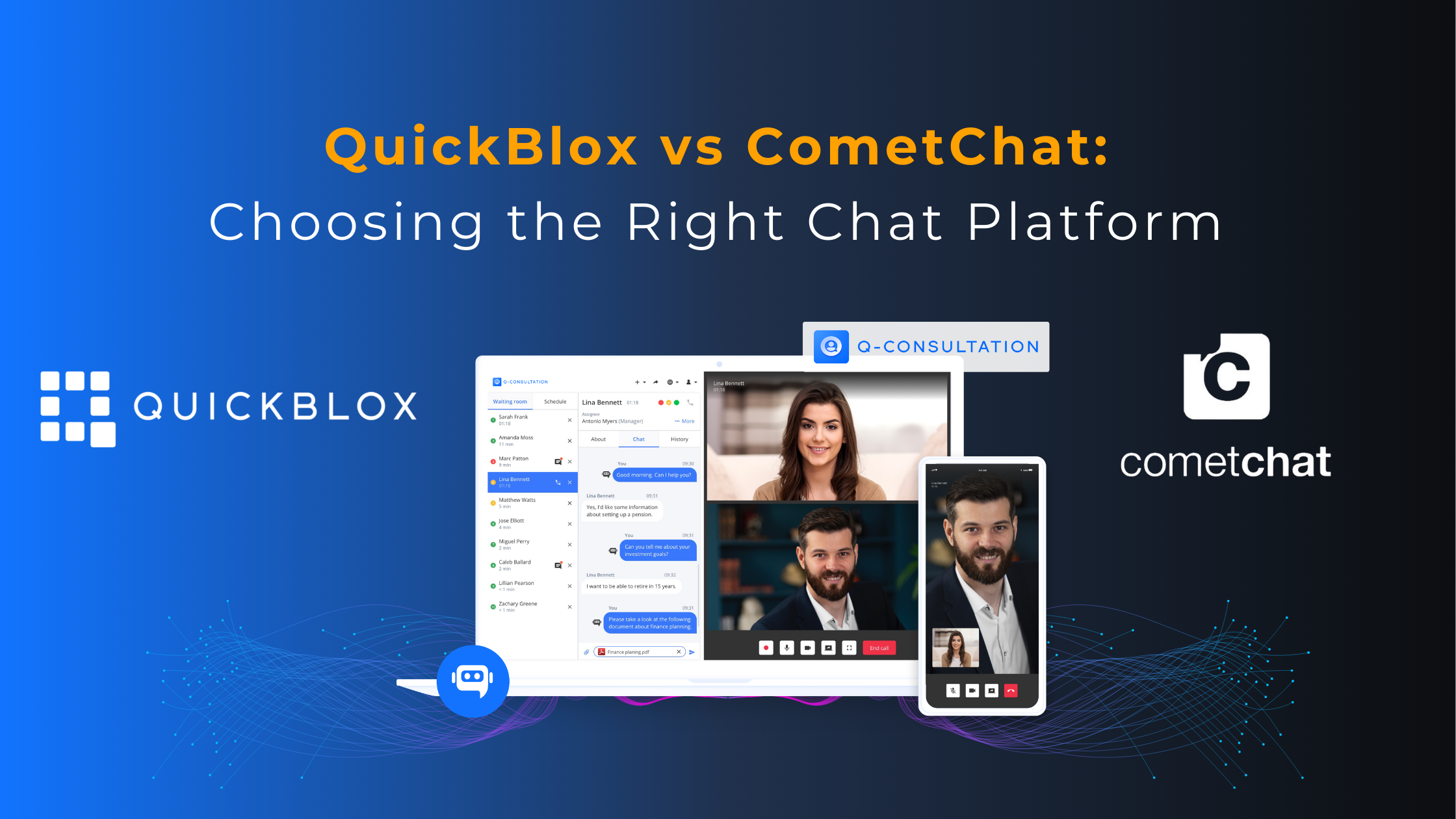
If you’re at the stage where you’re comparing platforms or trying to figure out what to invest in next, it’s worth choosing something that fits your real workflows and can grow with you. That’s exactly why we built Q-Consultation by QuickBlox — a white-label, secure telehealth platform designed to streamline workflows, reduce admin time, and give you the communication layer that supports long-term ROI.
In the end, a good telehealth investment should make your days smoother, your operations tighter, and your patients more supported. If it does that, the ROI almost always follows.
Talk to a sales expert
Learn more about our products and get your questions answered.
Contact sales
FAQS: Telehealth ROI
1. What is telehealth ROI, and why should my clinic even care about it?
Telehealth ROI is basically your way of figuring out whether all your digital platform is actually helping your clinic — less admin, fewer no-shows, smoother consults, better patient flow. It tells you if your telehealth investment is pulling its weight or just taking up space on your budget.
2. How do I tell if my digital health investment is actually working?
Don’t overthink it — just look for the changes you can feel day to day. Are patients being seen faster? Are intake forms less painful? Are providers getting through appointments without juggling paperwork? Those little improvements are usually the biggest signs your digital health investment is paying off.
3. What should I look for before making a health tech investment?
Focus on the practical stuff: Does it fit how your team actually works? Is onboarding a nightmare or pretty manageable? Does it play nicely with your EHR? And of course — is it HIPAA-ready? These things decide whether a health tech investment makes life easier or just creates more work.
4. How does Q-Consultation by QuickBlox help improve telehealth ROI?
Q-Consultation keeps things simple: fewer manual tasks, smoother intake, secure video and chat that just works, and workflows that don’t slow clinicians down. All of that adds up and boosts telehealth ROI without you needing a huge tech team behind the scenes.
5. Can QuickBlox support long-term health investment goals for our clinic?
Yes — that’s kind of the whole point. QuickBlox gives you a stable, scalable telehealth layer that grows with your practice instead of holding you back. It’s the type of health investment that keeps paying off as digital care becomes a bigger part of how you treat patients.
6. Why would a clinic investing in healthcare tech choose QuickBlox over other options?
QuickBlox is built to be flexible and practical: HIPAA-ready, customizable, automation-friendly, and easy for clinicians to actually use. For clinics investing in healthcare and wanting a reliable virtual care foundation, it’s a solid, low-stress choice.